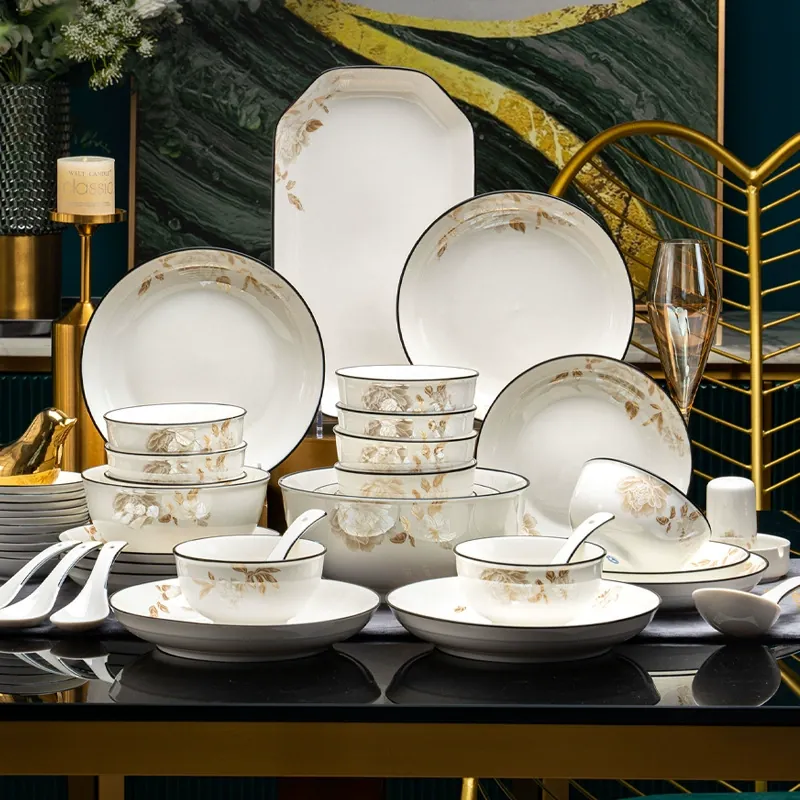
Learn how MOQs, material choices, and shipping terms affect the final cost of ceramic tableware, and how to calculate landed cost for your market.
Minimum Order Quantity (MOQ) is the smallest order a factory will accept. For ceramic tableware, MOQs vary by factory and product complexity. At our factory, the MOQ is 100 pieces per style, which is quite flexible for small retailers and startups. For custom decals or logos, the MOQ is 500 pieces. This allows you to test the market without overcommitting.
Several factors influence the unit price of ceramic tableware:
Material: Bone china is the most expensive, followed by porcelain, then stoneware. New bone china falls between bone china and porcelain.
Size and shape: Larger items or complex shapes require more material and labor, increasing cost.
Decoration: Hand-painted or intricate decals cost more than simple underglaze patterns. Custom logos also add to the price.
Quantity: Higher quantities usually reduce the unit price due to economies of scale.
Landed cost is the total cost of getting the product to your warehouse, including the factory price, freight, insurance, customs duties, and any other fees. To calculate it, you need to know the Incoterms (e.g., FOB or DDP).
With FOB (Free On Board), you pay for freight and insurance from the port of loading. With DDP (Delivered Duty Paid), the supplier covers all costs until delivery to your door, which simplifies the process but may be more expensive.
For example, if the factory price is $2.00 per plate, and you order 1,000 plates, the total is $2,000. Sea freight to the US might cost $500, insurance $50, and customs duties (typically 8-12% for ceramic tableware) $200. Your landed cost would be $2,750, or $2.75 per plate.
Sea freight is cost-effective for large orders but takes longer (30-40 days). Air freight is faster (5-10 days) but more expensive. For small orders, air freight may be worth it to reduce lead time. Our lead time is 25-35 days for production, plus shipping time.
Don't forget packaging costs, which are included in the factory price, but if you require special packaging, there may be an extra charge. Also, consider the cost of quality inspections and potential returns.
By understanding MOQ, pricing factors, and landed cost, you can make informed decisions and negotiate better with suppliers. Always ask for a detailed breakdown of costs to avoid surprises.
Tell us the product, quantity and destination — we'll reply with pricing and lead time within one business day.
Request a Quote